
Injury Rehabilitation and Sports Rehabilitation at the Winter Olympics – Insights from Team GB, Livigno 2026
What is it like being a sports therapist working with Team GB at the Winter Olympics in Livigno 2026?
After an intense 13 days in Livigno supporting the Team GB moguls squad and the gold medal-winning GB snowboard cross team, Tom Heeley reflects on the performance demands, injury rehabilitation challenges, and the precision required at the highest level of sport.
For Optimum Derby, this experience reinforces one clear principle: elite sports rehabilitation is built on detail, planning, and proactive injury management.
Elite Injury Rehabilitation in Olympic Snow Sports
Ski and snowboard injury rehabilitation is a highly specialised area. The biomechanical loads involved in moguls and snowboard cross are extreme—rapid deceleration, torsional knee stress, lumbar spine compression, and high-velocity impacts are routine.
Tom has now supported athletes across four Olympic cycles, contributing to three Olympic medals, including the recent gold medal with GB snowboard cross. Delivering effective injury rehabilitation in this environment requires:
Advanced musculoskeletal assessment
Structured, progressive load management
Integrated strength and conditioning principles
Clear communication between therapist, coach, and athlete
Constant adaptation to competition schedules
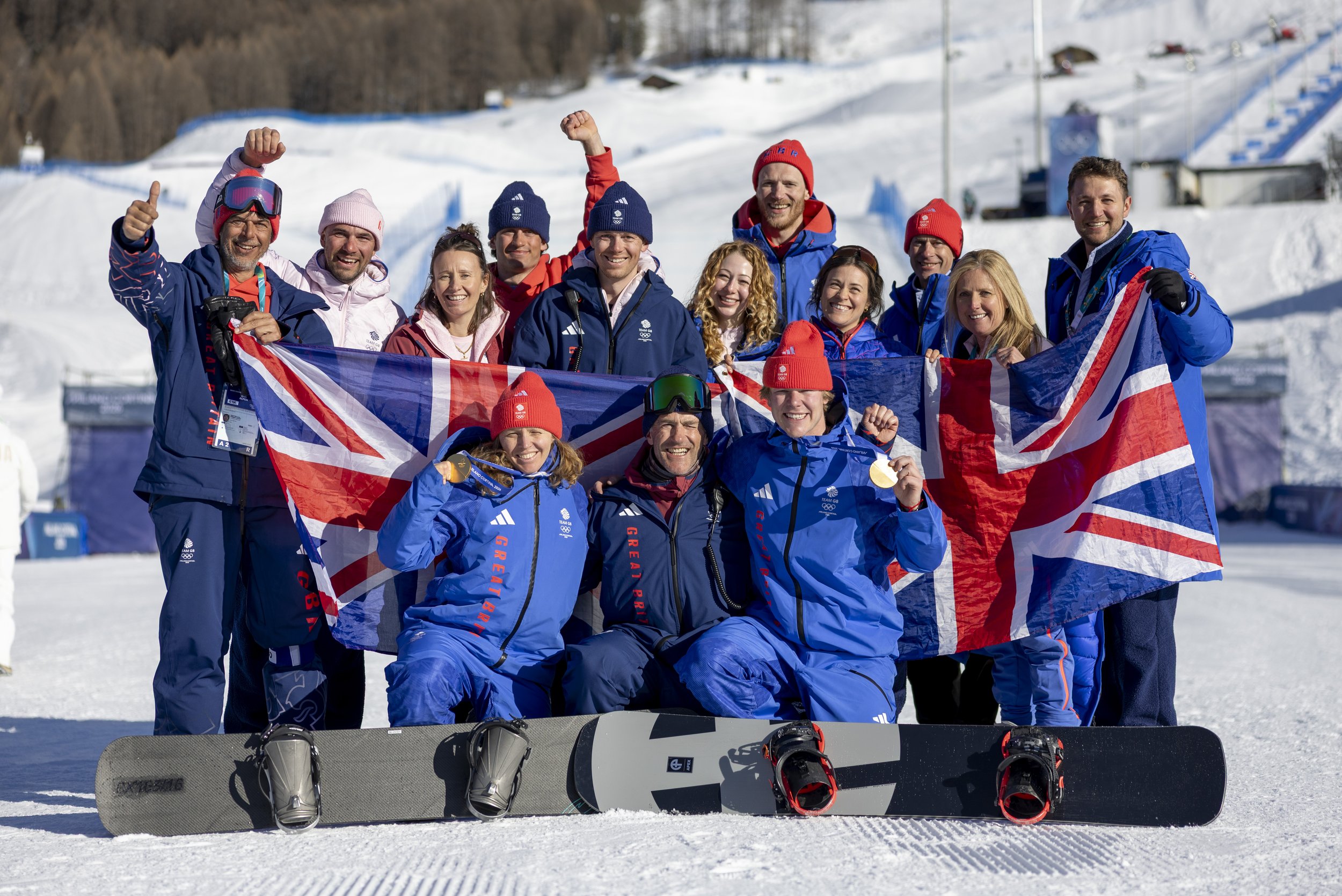
SBX Gold medal celebrations.
At this level, injury rehabilitation is not reactive. It is strategic, performance-focused, and integrated into daily training.
Sports Rehabilitation Across Multiple Olympic Disciplines
Tom’s Olympic sports rehabilitation experience extends beyond winter sport. His background includes work with:
Great Britain Swimming Team
Great Britain Weightlifting
Alongside extensive experience in team sports and motorsport injury rehabilitation, this cross-disciplinary exposure sharpens clinical reasoning and reinforces a principle central to sports rehabilitation: every athlete presents unique load patterns and injury risk profiles.
Injury Prevention and Rehabilitation – A Continuous Process
Injury rehabilitation at Olympic level is rarely about a single acute issue. Most athletes manage ongoing niggles, previous injuries, or structural vulnerabilities that require:
Regular manual therapy
Targeted corrective exercise programming
Monitoring of training volume and intensity
On-snow and off-snow load adjustment
Even when athletes are based in the French and Austrian Alps, ongoing sports rehabilitation support remains critical. Regular remote consultation, programme adjustments, and collaboration with coaching staff ensure athletes maximise time on snow while minimising injury risk.
This integrated approach mirrors the methodology used at Optimum Derby: structured rehabilitation planning, performance monitoring, and consistent follow-up support.
Bringing Olympic-Level Injury Rehabilitation to Optimum Derby
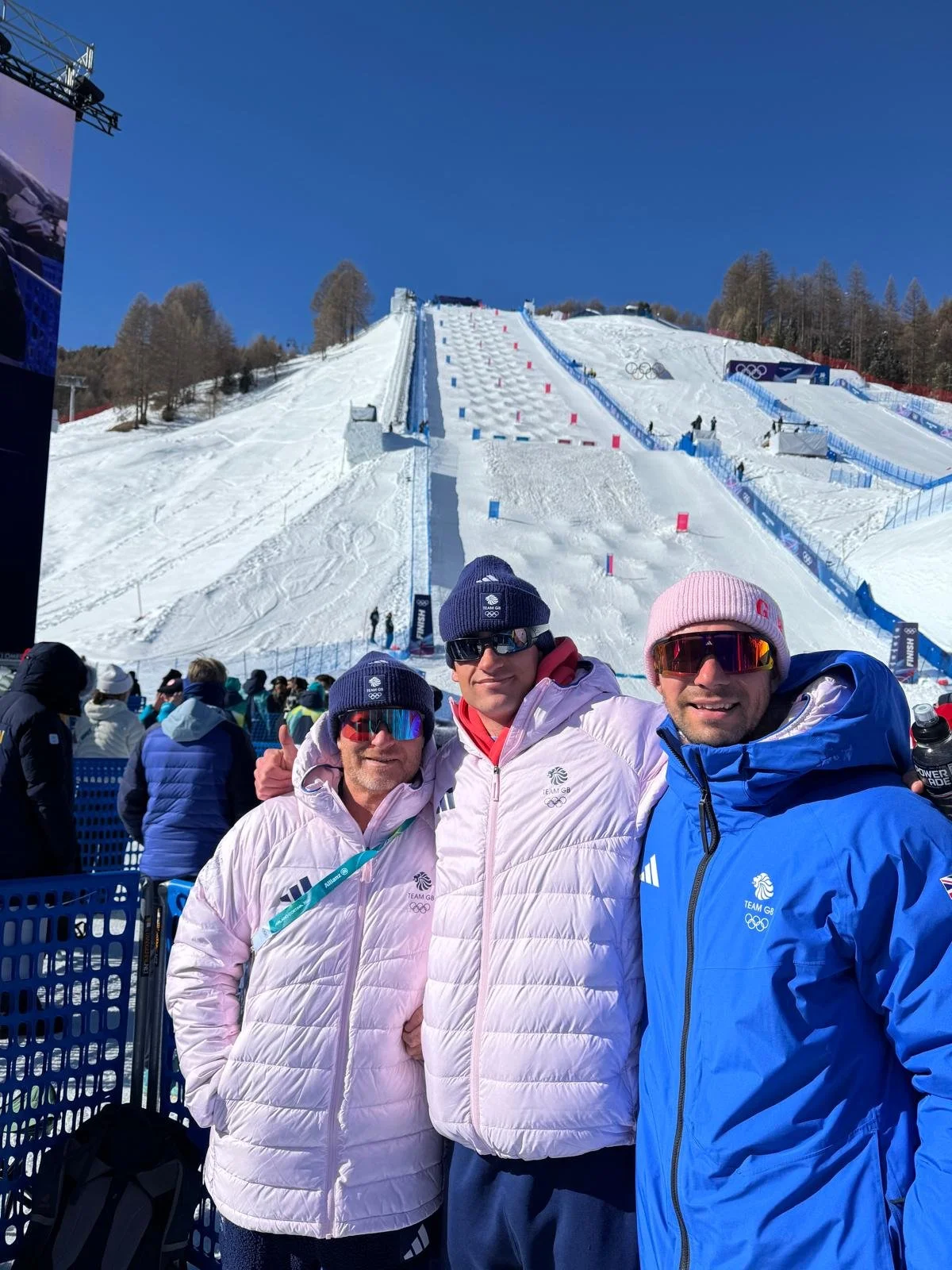
Head Coach - Jeff Fairbarn, Athlete - Mateo Jeanesson and Tom Heeley
The standards required to deliver Olympic sports rehabilitation directly influence the clinical approach at Optimum Derby.
Whether you are:
Recovering from a ligament injury
Managing chronic tendon pain
Returning to sport after surgery
Seeking structured sports rehabilitation to optimise performance
You receive the same evidence-based injury rehabilitation principles used with elite athletes.
Optimum Derby provides:
Comprehensive musculoskeletal assessment
Individualised sports rehabilitation programming
Strength-based return-to-sport protocols
Remote injury rehabilitation and online programming
Ongoing progression tracking and adjustment
Looking for Expert Injury Rehabilitation or Sports Rehabilitation?
If you are local to Derby and can attend Optimum Derby in person, or if you require structured online injury rehabilitation support, get in touch.
Elite-level sports rehabilitation is not reserved for Olympians. The same precision, progression, and performance-focused methodology can be applied to help you return to doing what you do best — safely and efficiently.